Commentary: Helicopter parenting has caused British teenagers to be unhappy
YORK: Children growing upward in the UK are said to be some of the unhappiest in the industrialised world.
The UK now has the highest rates of cocky harm in Europe. And the National Society for the Prevention of Cruelty to Children'south ChildLine Annual Review lists information technology as 1 of the top reasons why children contact the clemency.
Children's mental health has becomes 1 of British club'due south almost pressing bug. A recent report from the Prince's Trust highlights how increasing numbers of children and young people are unhappy with their lives, sometimes with tragic consequences.
READ: Is social media to arraign for young people feeling lonelier? A commentary
This is a generation of immature people that has been labelled as "snowflakes" – unable to handle stress and more than prone to taking offence.
They are besides said to have less psychological resilience than previous generations. And are idea to be too emotionally vulnerable to cope with views that challenge their own.
Social media likely plays a function in all this. Studies testify almost three quarters of 12 to 15-year-olds in the UK have a social media contour and spend an average of 19 hours a week online.
After all, this is the Facebook generation – and never before accept children grown up with such a daily bombardment of images, products and messages.
Simply there is too another factor at play – a gene much closer to home.
In the book "Taming Childhood?" it put forward the statement that children and young people may indeed have less resilience than previous generations, but argue this is considering they have fewer opportunities to develop it. The reason for this is that childhood has become tame.
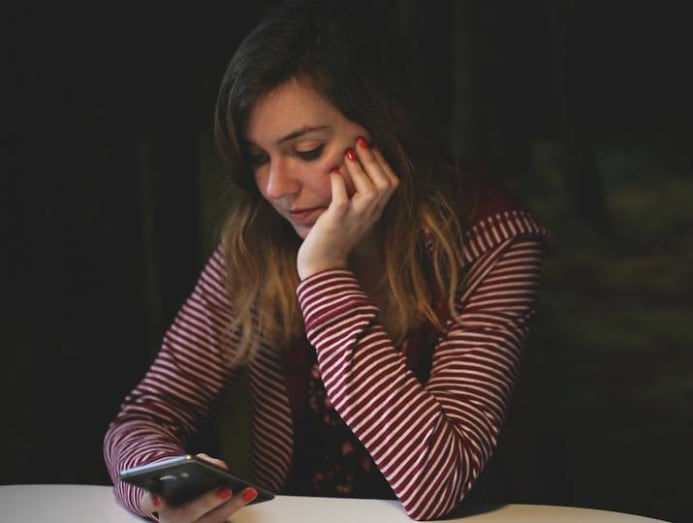
THE 'DANGERS' OF Childhood
Babyhood these days, is often seen by parents to be fraught with danger. Not simply is in that location issues with where children can play, who they tin talk to and what they should and shouldn't be doing, merely the net has opened upwards a whole new gear up of problems that parents must endeavor and law.
Children'due south lives are beingness stifled. No longer are children able to spend time with friends unsupervised, explore their community or hang around in groups without being viewed with suspicion.
Very little unsupervised play and activity occurs for children in public spaces or even in homes – and a children's spare time is often eaten upwards past homework or organised activity.
READ: Parents often don't know when teens have suicidal thoughts
This is further impacted by the way children are taught in schools and how pressure to succeed has led to a taming of pedagogy. Only if children are never challenged, if they don't ever experience adversity, or face risks then it is non surprising they volition lack resilience.
TAKING Command
This is non the consequence of one detail modify or development, nor is it purposeful. In many ways the stifling of children's experiences is often wrapped up in ideas about what is best for children, or what it means to be a skillful parent.
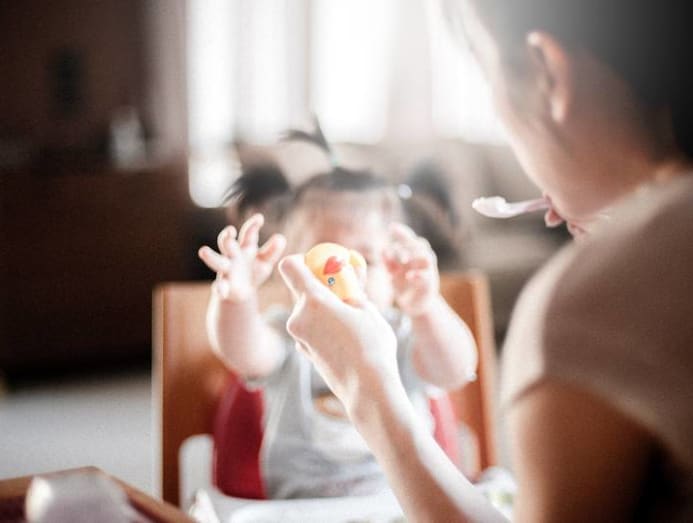
This can be seen in approaches to safeguarding which seek to remove all risks from children's lives. Or in approaches to parenting where adults take over conclusion making and restrict what children can do. This ultimately means children take fewer opportunities to engage, explore, and challenge their globe.
Ideas well-nigh skilful parenting, which emphasise knowing where children are and keeping them safe, combined with contemporary ideas that view children equally naturally vulnerable also fails to recognise their ability to cope with situations which we, as adults, deem to be circuitous.
READ: Protecting your kids from failure isn't helpful parenting, a commentary
This all comes against a backdrop of increasing concern for children's well-being. But what adults see as important for a child'south well-being and what children themselves meet equally being of import may not be the same.
COMPETITIVE PARENTING
Children are very ofttimes seen in terms of what they will get, rather than what they are. This has led to a rise in an intensive blazon of parenting – frequently referred to as "helicopter parenting". Studies have reported that well-beingness is reduced in children who feel helicopter parenting.
It may well exist that the competitive nature of contemporary order contributes to parents dominating their children'due south lives – for reasons that are rational to them. Merely in doing then they deed against the long-term interests of their children.
READ: Are you a helicopter parent? A commentary

The idea that children should non encounter hazard and should exist protected from everyday adversity means that parents restrict where children can go, and what they can practise – specially when unsupervised. This leads to a childhood that for many children, is characterised by supervision, surveillance and a lack of any real challenges.
So rather than this being an result with immature people, this is an upshot with society and parenting.
What is clear so is that parents demand to be supported rather than judged and then they tin feel confident in giving some level of conclusion making and freedom to their children.
READ: Should yous let your 5-year-old run errands outside of home? A commentary
Children also must be also viewed more than equally valuable to communities – so that a playground of unsupervised children is common place once more. Teaching also needs a rethink, so that children are not under constant force per unit area but are enabled to be independent and resilient beings once more.
Rob Creasy is Subject Director at the school of Psychological & Social Sciences in York St John Academy. Fiona Corby is Senior Lecturer in Didactics in Teesside University. This commentary start appeared in The Conversation.
Source: https://cnalifestyle.channelnewsasia.com/commentary/helicopter-parenting-unhappy-controlled-children-teenagers-uk-222931
0 Response to "Commentary: Helicopter parenting has caused British teenagers to be unhappy"
Enregistrer un commentaire